






 Settings
 Fast Delivery
 Free Shipping
 Incoterms
 Payment Types


 Marketplace Product

MEMS Sensors: No Slowdown in Applications, Innovation
Contributed By Electronic Products
2014-01-30
Micro Electro Mechanical (MEMS) systems continue to show steady growth according to top market research firms. IHS is predicting a 6.3 percent growth for 2013, with industry revenues hitting $1.6 billion. IHS attributes the strength to such industry segments as oil, gas, and aerospace deploying inertial and pressure sensors.
Another MEMS industry watcher, Yole Developpement of France (Figure 1) noted that cell phone demand continues to drive strong growth for MEMS devices, while evidence of the strength of the inertial sensor segment can be found in InvenSense, which recently acquired Analog Devices’ MEMS microphone division, chalking up an approximate 30 percent increase in sales, according to Yole.
The good news is that demand will trend upward at least through 2018, and in today’s economic environment, this is a quite a feat.
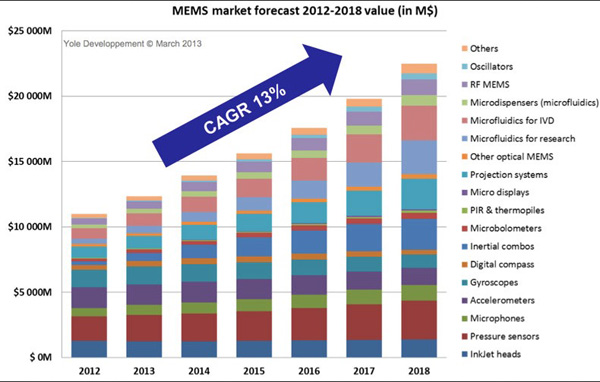
Figure 1: The market for MEMS chips will reach $22 billion by 2018, and applications continue to grow and expand (Courtesy of Yole Developpement).
Ever since it was understood that MEMS could help designers with miniaturization of myriad electronics systems, providing a related decrease in weight and power consumption, MEMS took off. Of course, the fact that MEMS are easier and more cost effective to manufacture, have virtually no moving parts, and that their use increased device reliability and performance helped to ensure that they would attract the attention of designers. As a result, automotive systems, mobile handsets, medical electronics, white goods, and military/aerospace hardware are all MEMS-rich. The integration of MEMS sensors that are loaded with features that remove tedious steps for engineers, and do so at a lower cost than before, has become key to their current and future application.
An example of such system integration is the ADIS16445 Compact, Precision Six-Degrees of Freedom Inertial Sensor by Analog Devices. The complete inertial system includes a triaxial gyroscope and a triaxial accelerometer. Each sensor in the ADIS16445 combines ADI’s iMEMS technology with signal conditioning, optimizing dynamic performance. Factory calibration characterizes sensors for sensitivity, bias, alignment, and linear acceleration (gyroscope bias). As a result, each sensor has its own dynamic compensation formulas for accurate sensor measurements.
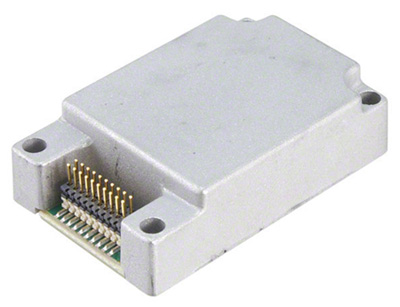
Figure 2: The ADIS16445 compact and precision 6-degrees-of-freedom inertial sensor provides system integration to ease design in navigation applications.
The ADIS16445 yields a simple, cost-effective method for integrating accurate, multiaxis inertial sensing into industrial systems. All necessary motion testing and calibration are done at the factory, greatly reducing system integration time. Tight orthogonal alignment further simplifies inertial frame alignment in navigation systems, while the SPI and register structures provide a simple interface for data collection and configuration control. Applications include navigation, robotics, and platform stabilization and control.
Automotive remains the largest industry user of MEMS devices. Direct injection systems, automotive safety, tire-pressure monitoring, and braking systems are all MEMS-sensor based.
Automotive safety includes vehicle chassis rollover sensing, and one sensor that fits the bill is the ADXRS620 ±300°/sec Yaw Rate MEMS Gyro by Analog Devices (Figure 3).
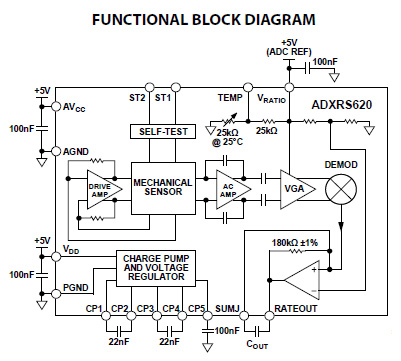
Figure 3: Functional block diagram of Analog Devices’ ADXRS620 gyroscope, which targets automotive-safety applications.
The ADXRS620 is a gyroscope that uses a surface-micromachining process to create a functionally-complete and low-cost angular rate sensor integrated into one chip. This automotive-grade gyroscope is 100 percent pin, package, temperature, and function compatible to the supplier’s industrial-grade ADXRS652 gyro. The output signal, RATEOUT (1B, 2A), is a voltage that is proportional to the angular rate about the axis normal to the top surface of the package. The output is ratiometric with respect to a provided reference supply. An external capacitor sets the bandwidth. The ADXRS620 is available in a 7 × 7 × 3 mm BGA ceramic package.
Inclination sensors are critical for high-accuracy leveling and inclination measurement instruments. High accuracy is available with the SCA103T series by Murata (Figure 4), a 3D-MEMS-based single-axis inclinometer family that uses the differential measurement principle to compensate all common mode error and noise effects.
Its high calibration accuracy combines extremely-low-temperature dependency, high resolution, and low noise together with a robust sensing element design. The inclinometers are insensitive to vibration based on over-dampened sensing elements, and they are said to withstand mechanical shocks of 20,000 g.
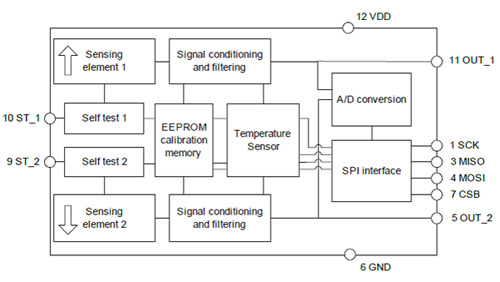
Figure 4: Functional block diagram of Murata’s SCA103T series inclination sensors, which are used for high-accuracy leveling and inclination measurement instruments.
These sensors provide excellent stability over temperature and time. They feature ratiometric analog voltage outputs, digital SPI inclination, and temperature output, and have comprehensive failure-detection features. They are also compatible with a lead-free reflow solder process. The device provides trouble-free measurements in moving machines, vehicles, airplanes, construction machines, and handheld devices.
Looking ahead
Where will the growth in MEMS sensor use come from in the future? Wearables and mobile health devices will prompt increased sales of MEMS motion sensors and accelerometers. Fitness as well as healthcare monitoring for an aging population will continue to push MEMS accelerometer, gyroscope, and electronic compass integration. Automotive will again be front and center, especially for MEMS pressure sensors.
Other applications include smart devices, such as watches and glasses, thermal cameras, and gas sensors. New on the scene are microbolometers, very small arrays of heat-detecting sensors that are sensitive to IR. They are used in surveillance systems, law enforcement, and firefighting, and will most likely be adopted elsewhere soon.
MEMS microphones will be found in a wide variety of consumer devices, ranging from smartphones, laptops, and games, to hearing aids, TVs, and cameras. Currently, Apple and Samsung are the top consumers of MEMS microphones, with more than 50 percent used by just these two companies. MEMS microphones will soon also make their way into automotive applications.
Consider the Knowles SPM0437HD4H, a miniature, high-performance, low-power, top-port silicon digital microphone with a single-bit PDM output. Using Knowles’ SiSonic MEMS technology, the SPM0437HD4H consists of an acoustic sensor, a low-noise input buffer, and a sigma-delta modulator. This device is suitable for applications such as cell phones, smartphones, laptop computers, digital still cameras, portable music recorders, and other portable electronic devices where wideband audio performance and RF immunity are required.
As with all sensor-related designs, sensor fusion continues to make headway. The sensor combinations used make it easier for design engineers to pull together and implement capabilities and unprecedented functionality in record time and at lower cost compared with the use of individual sensors. While handsets and tablets will stay at the top of the list, MEMS sensors, especially in consumer applications, will be integrated into virtually everywhere we look.
For more information on the parts discussed in this article, use the links provided to access product pages on the Digi-Key website.
Disclaimer: The opinions, beliefs, and viewpoints expressed by the various authors and/or forum participants on this website do not necessarily reflect the opinions, beliefs, and viewpoints of DigiKey or official policies of DigiKey.







 India
India